
For years, flower was the defining product in cannabis, it dominated dispensary shelves, consumer purchases and the culture surrounding the industry itself. But in 2025, the market entered a new era.
According to the 2026 State of the Pre-Roll Market Report, pre-rolls overtook flower in unit sales for the first time in the U.S., becoming the top-selling cannabis product on the market by volume. Pre-roll revenue climbed 9.8% year-over-year to nearly $3.6 billion, while unit sales surged 18.6% to 383.2 million units sold.
That historic milestone reflects the rapid rise of convenience-driven cannabis products and changing consumer behavior across the board.
But hidden inside the report’s consumer data is another major story:
Women, especially Millennial women, may be one of the most important growth forces in the modern pre-roll market.
The report found men accounted for 58.9% of all pre-roll purchases and 60.2% of total dollars spent in 2025.
At first glance, that may suggest pre-rolls remain a heavily male-driven category, but a closer look reveals a more nuanced picture.
Millennial women ranked as the second-largest consumer segment overall, trailing only Millennial men and outperforming Generation X men and Gen Z men in total buying power. That is a significant finding.
It suggests the most valuable female consumer segment in cannabis may already be larger than many male cohorts traditionally prioritized by brands and marketers.
Why Millennial Women Matter So Much
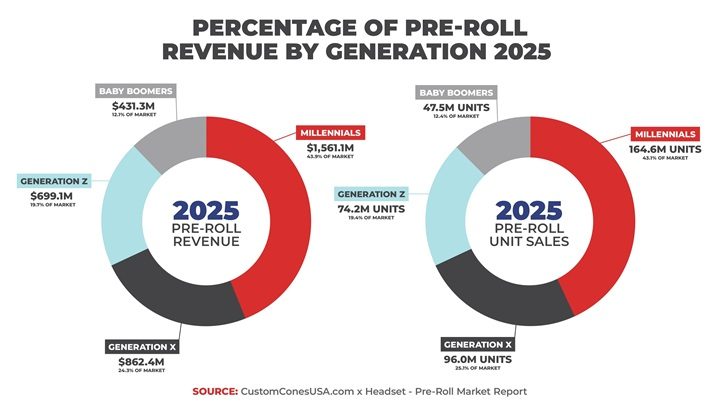
Millennials already dominate the pre-roll category overall. The report found Millennials accounted for 43.9% of all pre-roll revenue and 43.1% of all units sold, totaling roughly $1.6 billion in annual spending.
Within that generation, women are clearly playing a larger role than many may assume.
Millennial women are now in prime consumer years, often balancing careers, family responsibilities, wellness interests, social activity and time efficiency. Those life-stage realities align closely with what pre-rolls offer:
Ready-to-use convenience, predictable formats, smaller commitment purchases, easy portion control and portable and discreet options where legal. For many consumers, that usability matters just as much as potency.
The modern pre-roll category has evolved well beyond the outdated stereotype of low-end trim and shake convenience joints.
Today’s offerings include premium infused products, stylish multi-packs, strain-specific options, large and small sizes, custom branded packaging, as well as premium tips and specialty formats.
Those changes make the category more approachable for a broader audience. Consumers who may not want to grind flower, use accessories or manage loose product can instead purchase something simple, consistent and ready to smoke.
That ease-of-use likely broadens appeal across many demographics, including women who value convenience and straightforward product experiences.
Cannabis Marketing Needs to Play Catch Up
Historically, parts of the cannabis industry marketed heavily toward younger male consumers. While that audience remains important, the new data suggests brands relying on old assumptions could be overlooking one of the category’s strongest growth opportunities.
Millennial women already rank near the top of the market, signaling a major opportunity for brands that better understand female consumers and how they shop. Future winners may be those that focus on thoughtful product design built around convenience, freshness, portability and consistency, rather than relying solely on potency claims. Cleaner branding may also matter, replacing cliché “heady” cannabis imagery with the polished look and feel consumers expect from modern packaged goods.
Messaging that speaks to real-life occasions, such as relaxation, social settings, wellness routines and balanced lifestyles can resonate more deeply than generic promotional language. Trusted education will be another advantage, with clear labeling, dosage confidence and approachable communication helping consumers feel more informed and comfortable. Just as importantly, broader representation in marketing that reflects who is actually purchasing products today can help brands build stronger connections.
As cannabis becomes more mainstream, the companies behaving like modern consumer brands may be the ones that pull ahead.
The annual report also found pre-roll sales grew across every demographic in 2025, suggests that the category still has broad momentum rather than relying on one narrow customer base.
As stigma declines and access expands, women represent one of the clearest opportunities for incremental category growth, especially in newer markets and mature markets seeking new customers.
In many consumer categories, women drive household purchasing trends and brand loyalty, and cannabis may increasingly follow that pattern.
Why This Matters for Retailers
Dispensaries should pay attention to this shift as well, as retail environments built around product education, an approachable shopping experience and curated recommendations may perform better than environments focused only on potency or bargain pricing.
If Millennial women are already one of the top buying groups, serving them better could directly impact basket size, repeat purchases and customer retention.
The report projects total pre-roll sales could rise to $3.8 billion to $4 billion in 2026, with longer-term growth pushing the category beyond $5 billion by 2030.
If that growth materializes, the next winners may not simply be brands chasing the loudest consumers, they may be the ones recognizing where momentum is already building.
Pre-rolls overtook flower because the market evolved toward convenience, accessibility and modern retail behavior, and women – especially Millennial women – may be one of the clearest signs of where that evolution is headed next.
Flower may have built cannabis, but the future of pre-rolls may be broader and more diverse than many expected.